Finding cheap car insurance in 2026 is more challenging and more important than ever. With average full-coverage premiums running $2,300 to $2,700 annually and rate variation between carriers for the same driver sometimes exceeding $1,500 per year, choosing the right insurer can make a meaningful difference in your financial life. The challenge is that cheap insurance that fails you at claim time is not actually cheap at all.
This guide ranks the best cheap car insurance companies of 2026 based on a comprehensive evaluation of price competitiveness across multiple driver profiles, claims satisfaction ratings, coverage depth, discount catalog breadth, and financial strength. No single carrier is best for every driver, so this guide also helps you identify which carrier type is most likely to offer you the best combination of price and quality for your specific situation.
In This Article
How We Evaluated These Companies
Price alone is a dangerous basis for choosing auto insurance. An insurer that prices attractively but disputes claims aggressively, processes them slowly, or generates excessive complaints ultimately costs policyholders more than the premium savings. Our evaluation weighted five factors: price competitiveness based on industry rate data across multiple driver profiles, J.D. Power and AM Best satisfaction and financial strength ratings, state insurance department complaint ratios, coverage depth and flexibility, and discount catalog breadth.
Top 8 Cheap Car Insurance Companies of 2026
1. GEICO: Best Overall for Clean-Record Drivers
GEICO has maintained its position as one of the most price-competitive major national carriers through 2026, particularly for drivers with clean records, good credit, and standard risk profiles. GEICO's low-overhead direct-to-consumer business model, which limits agent commission expenses, allows it to price more aggressively than carriers with large agent networks for this segment.
The discount catalog is extensive, including federal employee discounts, military service discounts, good driver discounts reaching 25 percent, multi-vehicle discounts, defensive driving course discounts, and vehicle safety feature discounts. GEICO's mobile app is highly rated for usability and supports digital insurance cards, claims filing, and roadside assistance requests. For standard, clean-record drivers, GEICO should be on every comparison shopping list as a likely strong competitor.
Best for: Clean-record drivers, federal employees, military members, multi-vehicle households, drivers seeking the most digital-forward experience.
Approximate annual full coverage for clean-record driver: $1,800 to $2,100.
2. Progressive: Best for Non-Standard Risks and Comparison Shopping
Progressive's market positioning centers on two key differentiators: the Name Your Price tool that lets drivers specify a budget and see coverage options within it, and a willingness to insure driver profiles that many carriers decline or heavily surcharge. Drivers with recent accidents, DUI history, or other non-standard risk factors often find Progressive competitive where other carriers are not.
The Snapshot telematics program is one of the market's most established, with the notable caveat that it can increase rates for poor driving data. Progressive's rates for standard-risk clean-record drivers are competitive but not always best-in-market. Their real advantage is consistency and accessibility across risk profiles that most carriers shun.
Best for: Non-standard risk drivers, frequent comparison shoppers, households with mixed risk profiles.
3. State Farm: Best for Bundling and In-Person Agent Access
State Farm's massive agent network makes it the insurer of choice for drivers who prefer in-person service and the ability to build a relationship with a specific agent. The bundling advantages are real and meaningful: combining auto and home insurance with State Farm consistently produces multi-policy discounts that make the overall cost competitive even when the auto rate alone might not be the lowest available quote.
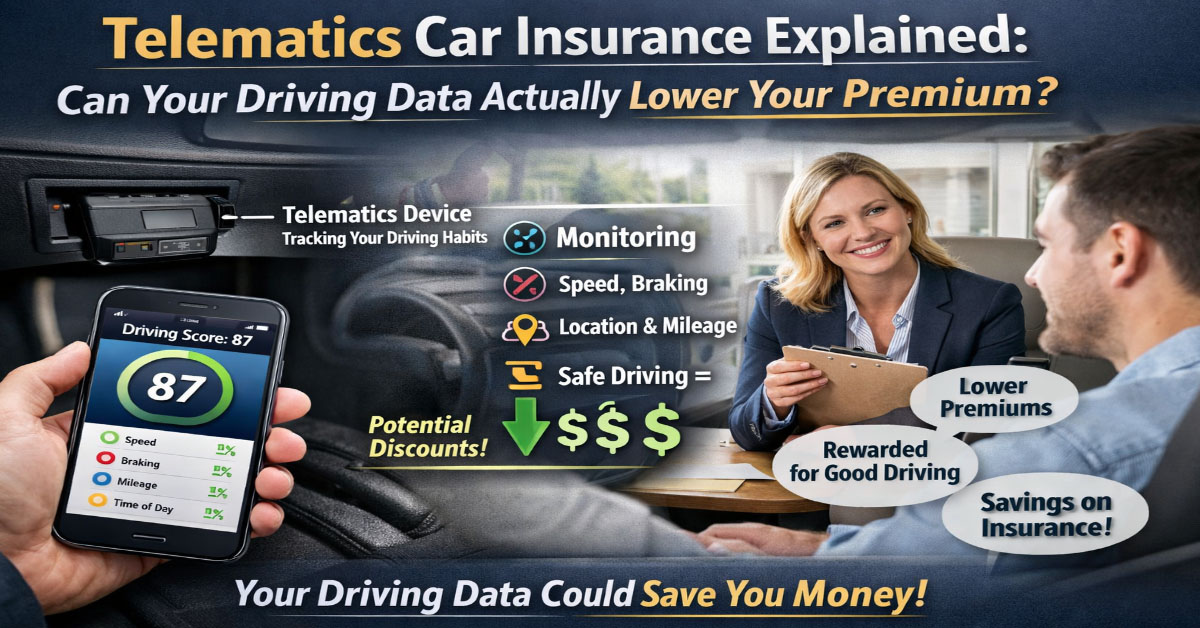
Drive Safe and Save, State Farm's telematics program, uses Bluetooth connectivity and cannot raise rates based on driving data, making it lower-risk to enroll than Progressive Snapshot. The program has produced up to 30 percent reductions for top-performing drivers. State Farm also excels at claims handling in most markets with strong financial stability ratings.
Best for: Homeowners who want to bundle policies, drivers who value ongoing agent relationships, families managing multiple policies across multiple household members.
4. Travelers: Best for EV Owners and New Vehicle Buyers
Travelers has invested specifically in competitive EV pricing and has emerged as one of the more affordable options for electric and hybrid vehicle owners. For conventional vehicles, Travelers' IntelliDrive telematics program offers up to 20 percent savings. Travelers also tends to price competitively for newer vehicles equipped with modern safety technology, making them worth quoting specifically if your vehicle has advanced driver assistance features.
Best for: EV and hybrid owners, buyers of new vehicles with ADAS technology, drivers in states where Travelers has strong regional presence and competitive book-of-business rates.
5. USAA: Best in Class for Eligible Members
USAA offers consistently the lowest rates in the market along with exceptional claims handling and customer service, but eligibility is limited to active military personnel, veterans, and their immediate family members. If you qualify, USAA should be your very first quote. USAA typically quotes 15 to 30 percent below national competitor averages for the same driver profile, and customer satisfaction ratings are consistently the highest in the industry across J.D. Power surveys year after year.
Best for: Any eligible military member, veteran, or immediate family member. If you qualify and are not already with USAA, get a quote immediately. This is not hyperbole; the savings are consistently documented and the service quality is exceptional.
6. Nationwide: Best for Low-Mileage and Pay-Per-Mile Drivers
Nationwide's SmartMiles pay-per-mile program is among the best in the market for drivers who drive significantly fewer than average miles. A base monthly rate plus a per-mile charge means annual premiums can fall well below $1,000 for very low-mileage drivers. For remote workers, retirees, urban residents with good transit access, and anyone who drives under 8,000 miles annually, SmartMiles can produce dramatic savings compared to traditional annual-mileage-estimated pricing models.
Best for: Remote workers, retirees, urban residents who drive infrequently, seasonal drivers, anyone driving under 7,000 to 8,000 miles per year.
7. Erie Insurance: Best Regional Carrier for Eligible States
Erie Insurance operates in 12 states across the mid-Atlantic, Midwest, and Southeast and consistently ranks among the highest in customer satisfaction while offering competitive pricing for the markets where it operates. Erie's Rate Lock feature, which prevents rate increases at renewal unless you make changes to your policy, is a unique benefit that eliminates the renewal shopping anxiety most drivers face. Erie is only relevant if you live in one of their operating states, but drivers in those states who have not received an Erie quote are almost certainly leaving money on the table.
Best for: Drivers in Erie's operating territory who want rate stability and consistently high service quality. Check eligibility at erie.com before assuming you cannot access this carrier.
8. Auto-Owners Insurance: Best for Comprehensive Coverage Options
Auto-Owners is an agent-distributed carrier that emphasizes depth of coverage and policy customization options over the lowest possible base premium. For drivers who want comprehensive protection, broad endorsement availability, and strong claims support, Auto-Owners consistently produces excellent outcomes. They are not always the cheapest option but frequently competitive while offering coverage depth that budget-oriented carriers cannot match.
Best for: Drivers prioritizing comprehensive coverage depth over minimum price, those who value broad endorsement options and strong claims handling track records.
Quick Price Estimates: National Average, Clean Record, Full Coverage
Best Choice by Driver Profile
Young Drivers Ages 18 to 25
Young drivers face the highest base rates in the market. GEICO and Progressive tend to be most competitive for this segment nationally. Telematics programs offer a legitimate pathway to savings for young drivers whose actual driving behavior is safer than their demographic profile suggests. USAA members in this age group have by far the best option available if they qualify through a parent's military service. State Farm's student discounts and Drive Safe and Save program are worth evaluating specifically for college students away from home.
Drivers with Recent Accidents or Violations
Progressive is specifically designed to compete for non-standard risk drivers and should be your first quote if you have a recent at-fault accident, DUI, or serious violation. State Farm and Nationwide are also worth quoting. At a certain level of risk history, some drivers will need coverage from non-standard specialty carriers accessible through an independent broker, as standard carriers decline coverage or price prohibitively.
Drivers with Poor Credit
Credit-based insurance scoring affects premiums at most major carriers, but the magnitude of the impact varies significantly between carriers. Shopping broadly and specifically comparing quotes across multiple carriers is even more important for drivers with credit challenges, because the carrier with the smallest credit scoring penalty for your specific profile can save hundreds of dollars annually compared to the most punitive carrier for that same profile.
Homeowners Who Bundle
State Farm, Allstate, Travelers, and GEICO all offer meaningful bundling discounts. The optimal choice depends on comparing the total bundled auto-plus-home premium from multiple carriers rather than evaluating auto rates in isolation. Sometimes a carrier with a slightly higher auto rate offers a larger bundling discount that makes the overall package more competitive than the cheapest standalone auto rate.
Do Not Overlook Regional Carriers
National brand recognition and advertising spend do not correlate with pricing competitiveness or service quality. Regional and super-regional carriers including Erie, Amica Mutual, Farm Bureau companies, Auto-Owners, and Shelter Insurance consistently outperform national carriers in customer satisfaction surveys and are often price-competitive in their operating areas.
The challenge with regional carriers is access: they often only sell through independent agents rather than directly online, making them invisible to drivers who shop exclusively through comparison websites. Working with an independent insurance broker who has access to regional carrier quoting systems is the most efficient way to include these options without spending hours on individual research. For drivers who have not had competitive quotes in the past two or three years, adding regional carrier quotes through a broker is one of the most likely ways to discover meaningful savings.
Minimum Coverage vs Full Coverage
Every state requires at minimum liability insurance, which covers damage and injury you cause to others in an at-fault accident. State minimums are shockingly low in many states and completely inadequate for the financial exposure a serious accident creates. Many states have $25,000 per-person bodily injury limits that could be exhausted by a single night in a hospital intensive care unit in 2026.
Full coverage adds collision and comprehensive to the liability base. Full coverage is financially mandatory if you have an auto loan or lease and highly advisable for any vehicle worth more than approximately $8,000 to $10,000 where you could not replace it comfortably from existing savings. The minimum-versus-full decision is not about finding cheaper coverage by dropping protections; it is about ensuring your coverage level is actually adequate for your vehicle value and financial exposure.
How to Get the Lowest Available Rate
Pull your current declarations page and note your exact coverage levels, limits, and deductibles. This is your comparison baseline. Every competing quote must use identical parameters for a meaningful comparison. Get at least five to seven quotes including your current carrier, two to three major nationals, one to two regional carriers, and any carrier-specific products relevant to your situation. Be completely accurate on your application; insurers verify driving records and vehicle information electronically at binding, and discrepancies can void coverage or produce retroactive adjustments that eliminate your savings.
Ask each carrier you quote with to explicitly list every discount you qualify for based on your profile. Do not assume all applicable discounts are automatically included in an initial quote. Specifically ask about occupation, alumni, employer group, defensive driving, and smart home device discounts that require you to volunteer relevant information before they can be applied.
Red Flags in Cheap Policies
Cheap insurance can represent genuine competitive pricing or it can represent coverage that will fail when you need it. Very low state minimum liability limits offered as the default without prompting you to consider adequacy is a red flag. AM Best financial strength ratings below A-minus suggest potential solvency concerns. Complaint ratios significantly above the national median, available at state insurance commissioner websites, suggest an insurer that prices attractively but disputes claims aggressively. These ratios are worth checking before committing to any unfamiliar carrier offering a dramatically lower rate than its competitors.
Understanding Your Auto Insurance Declarations Page
Your declarations page, commonly called the dec page, is the single most important document in your auto insurance relationship. It is a one or two page summary of everything your policy covers: the covered vehicles, all named drivers, each coverage type, the limit for that coverage, the deductible, the premium for that coverage, and the total annual premium. Knowing how to read your declarations page is the foundation of any intelligent insurance management decision.
The coverage section lists each coverage type separately: bodily injury liability, property damage liability, medical payments or personal injury protection, uninsured motorist, underinsured motorist, collision, comprehensive, and any endorsements you have added. Each coverage has a premium associated with it. By examining these individually, you can identify which coverages are consuming the largest share of your premium and evaluate whether adjusting them would make sense for your situation.
The limits section shows the maximum the insurer will pay for each coverage category. Bodily injury limits are expressed as a per-person and per-occurrence pair, such as $100,000 per person and $300,000 per occurrence. This means the insurer will pay up to $100,000 for any single injured person and up to $300,000 total for all injured parties from a single accident. Understanding these limits and whether they are adequate for your asset level is one of the most important evaluations you can perform on your current policy.
When you compare quotes from competing carriers, you are comparing their pricing for identical declarations page specifications. Any quote with different limits, deductibles, or coverage inclusions is not a meaningful comparison regardless of how the headline number looks. The discipline of quoting on identical specifications is what separates productive insurance shopping from the experience of switching to a cheaper policy only to discover the coverage gap when a claim occurs.
How Accident Forgiveness Programs Work
Accident forgiveness is an endorsement or program feature offered by many major carriers that waives the premium surcharge for a first at-fault accident within a defined eligibility window. The programs vary significantly between carriers in terms of eligibility requirements, how the forgiveness is earned or purchased, and exactly what is forgiven.
Some carriers include accident forgiveness automatically after three to five years of continuous claim-free coverage with that carrier. Others offer it as a purchasable endorsement add-on. Some programs forgive only the first at-fault accident regardless of severity. Others have damage amount thresholds above which forgiveness does not apply. Understanding the specific terms of your carrier's program before you need it is valuable because the program that sounds like unconditional protection may have conditions that exclude the specific scenario you encounter.
The financial value of accident forgiveness depends on your carrier's standard at-fault surcharge rate and your current premium. If your carrier applies a 35 percent surcharge for three years on a $2,200 annual premium, a single forgiven at-fault accident saves $2,310 in cumulative surcharge costs. The endorsement typically costs $50 to $150 annually. At those numbers, accident forgiveness pays for itself if you have even one at-fault accident during your policy period, making it worth considering particularly for drivers who commute in high-traffic areas or whose household includes younger drivers with statistically higher accident frequencies.
Insurance coverage decisions benefit from regular review because both your circumstances and the insurance market change continuously. Setting a calendar reminder to review your coverage at least 30 days before each renewal gives you time to compare quotes, evaluate coverage changes, and make adjustments based on changes in your financial situation, family structure, or risk exposure. The most effective insurance strategy is not a one-time decision but an ongoing process of alignment between your coverage structure and your actual needs and financial capabilities.